read the article

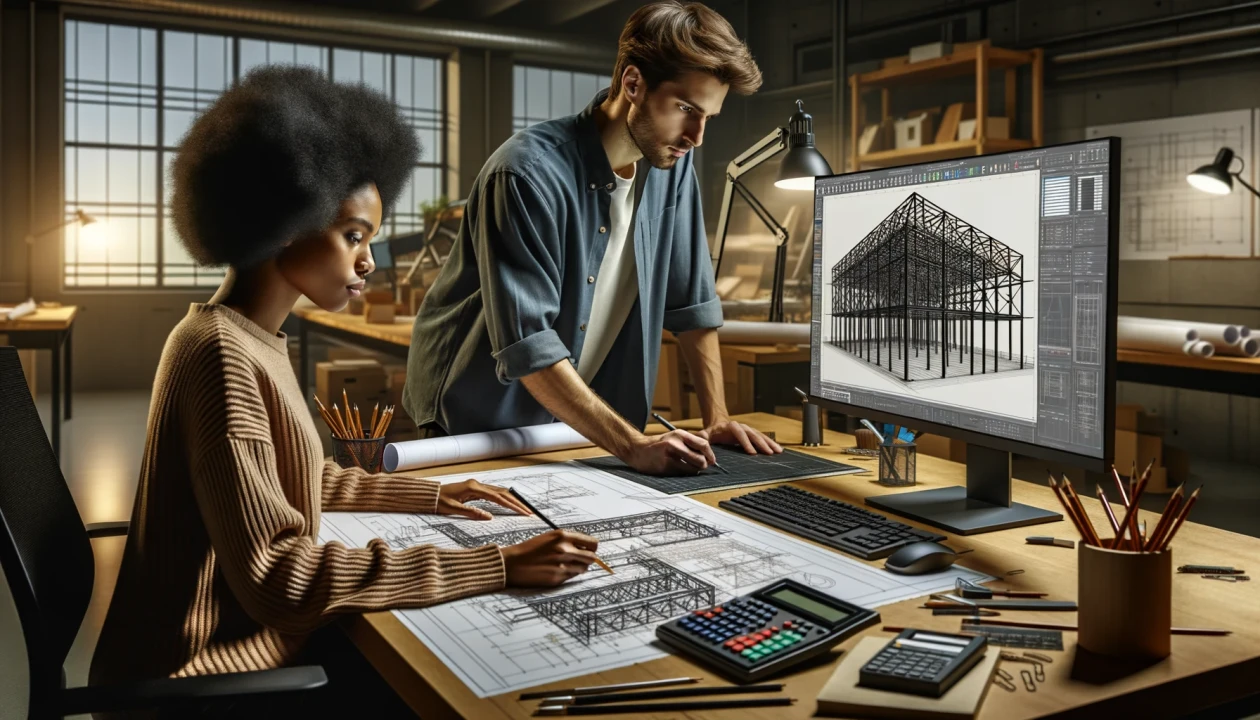
The world of engineering has come a long way since its inception, particularly in the realm of steel detailing. From manual drafting to the advent of advanced 3D software, the methods of designing and planning have undergone a significant transformation. This article delves into the journey of steel detailing, from its hand-drawn beginnings to the sophisticated software-driven designs of today
Historical Background
Steel detailing dates back to the 19th century when the industrial revolution was at its peak. Engineers and draftsmen would meticulously draw each component of a structure by hand, ensuring every measurement was accurate. Manual drafting predominated until the mid-20th century.
It was not until the late 20th century, specifically in the 1980s and 1990s, that computer-aided design (CAD) tools started to gain prominence in the field of engineering. These software tools revolutionized the way engineers and draftsmen worked, making the process faster, more efficient, and significantly reducing the margin of error.

Hand Drawn Drafting: The Pros and Cons
Pros:
1. Attention to Detail: Manual drafting allowed draftsmen to deeply engage with each design, ensuring thoroughness and accuracy.
2. Tangible Connection: The hands-on nature of manual drafting fostered a tangible connection between the draftsman and the project.
3. Independence from Technology: Draftsmen weren't reliant on software or hardware, making the process less susceptible to technical glitches.
Cons:
1. Time-Consuming: Manual drafting was labor-intensive and required a significant amount of time.
2. Limited Scalability: As projects grew in size and complexity, it became challenging to manage them manually.
3. Prone to Errors: Despite the meticulousness, human errors could still creep in.

Advanced 3D Software: The Pros and Cons
Pros:
1. Efficiency: 3D software speeds up the drafting process, allowing for multiple views and angles.
2. Precision: The software offers tools that guarantee a high degree of accuracy.
3. Interactivity: Engineers can simulate different scenarios, assess potential problems, and make changes on the fly.
4. Collaboration: These tools promote collaborative efforts, enabling multiple stakeholders to work on a project simultaneously.
Cons:
1. Steep Learning Curve: 3D software requires training and continual learning, especially as new versions are released.
2. Reliance on Technology: Being heavily dependent on software can pose challenges, especially when facing technical issues.
3. Cost: Procuring and maintaining licenses for advanced software can be costly.
Conclusion
Both manual drafting and advanced 3D software have their unique strengths and weaknesses. While manual drafting instilled a deep appreciation for the intricacies of design, it was time-consuming and less adaptable to the growing demands of the industry. In contrast, 3D software ushered in an era of efficiency, collaboration, and precision, but it also came with its own set of challenges.
In the end, it's essential to recognize the contributions of both methods. Manual drafting laid the foundation, teaching us the importance of attention to detail. Advanced 3D software, on the other hand, equips modern engineers with the tools necessary to navigate the complexities of today's engineering landscape. The evolution from hand-drawn designs to software-driven creations is a testament to the industry's adaptability and commitment to innovation.
recent post